
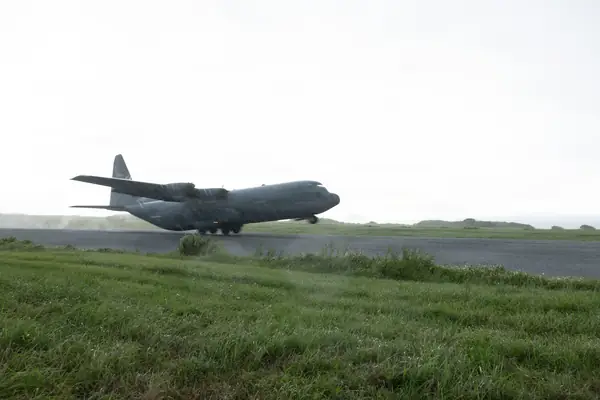
In a significant demonstration of preparedness and collaboration, members of the U.S. Air Force's 18th Wing alongside local government officials conducted a joint tsunami evacuation drill at Kadena Air Base in Okinawa, Japan, on September 26, 2026. This exercise was designed to simulate the response to a tsunami threat, a natural disaster that poses a significant risk to the region given its geographical location along the Pacific Ring of Fire, an area notorious for seismic activity.
The drill involved various scenarios that could occur in the event of an actual tsunami, including the rapid evacuation of personnel and their families from the base, as well as the coordination of emergency services to ensure a swift and effective response. Participants practiced the use of emergency communication systems, evacuation routes, and the mobilization of resources to assist those in need. The exercise also included local government officials, highlighting the crucial partnership between military and civilian authorities in disaster preparedness.
Okinawa's vulnerability to tsunamis has been underscored by historical events, including the devastating 2011 Tōhoku earthquake and tsunami that caused widespread destruction across Japan. The island's strategic importance to the U.S. military, as a hub for air and naval operations in the Asia-Pacific region, adds another layer of urgency to these preparedness efforts. The 18th Wing, based at Kadena Air Base, plays a critical role in U.S. defense strategy, and ensuring the safety of its personnel and their families is paramount.
The drill not only served as a practical exercise but also as a public reassurance to the local community that both the U.S. military and local authorities are committed to safeguarding lives in the event of a natural disaster. Local officials expressed gratitude for the collaboration, emphasizing that such drills are essential for building resilience within the community.
In a statement following the drill, Colonel John Smith, commander of the 18th Wing, remarked, "Exercises like today's are vital to ensure that we are ready to respond effectively to any emergency. Our partnership with local government officials strengthens our collective ability to protect our families and communities."
The geopolitical implications of such exercises extend beyond mere disaster preparedness. As tensions in the Asia-Pacific region continue to evolve, particularly with North Korea's missile tests and China's assertive territorial claims in the South China Sea, the U.S. military's presence in Okinawa remains a focal point of regional security. The ability to respond quickly to both natural disasters and potential military threats is essential for maintaining stability.
Financially, the investment in disaster preparedness and response infrastructure is critical for both the military and local economies. Effective evacuation procedures can mitigate the economic impact of disasters, ensuring that communities can recover more swiftly and maintain operational readiness for military installations.
As climate change continues to exacerbate the frequency and intensity of natural disasters, the importance of such drills will only grow. The collaborative efforts demonstrated during this exercise may serve as a model for future initiatives, fostering a culture of preparedness that benefits both military personnel and the local population. The successful execution of this drill not only enhances immediate safety but also strengthens the long-term resilience of Okinawa against the threats posed by both natural and geopolitical challenges.